What You Need to Know About Fines in Poland
 Living abroad can bring unexpected fines - some laws differ significantly from what you may be used to back home. On top of that, many foreigners don't speak Polish, and the language barrier is often behind unintentional violations of the law.
Not cleaning up after your dog or walking it in the wrong place? Disturbing the peace? Paying taxes late? We have some bad news: these violations carry real consequences, and you can be fined.
Living abroad can bring unexpected fines - some laws differ significantly from what you may be used to back home. On top of that, many foreigners don't speak Polish, and the language barrier is often behind unintentional violations of the law.
Not cleaning up after your dog or walking it in the wrong place? Disturbing the peace? Paying taxes late? We have some bad news: these violations carry real consequences, and you can be fined.
What Is an Administrative Fine?
Administrative penalties in Poland fall into three categories:
- mandat karny (petty offence fine) - a penalty for violating the Code of Minor Offences;
- kara administracyjna (administrative penalty) - a sanction for breaching the Code of Administrative Procedure;
- financial penalties for violations of tax regulations, local authority ordinances, environmental rules, and similar.
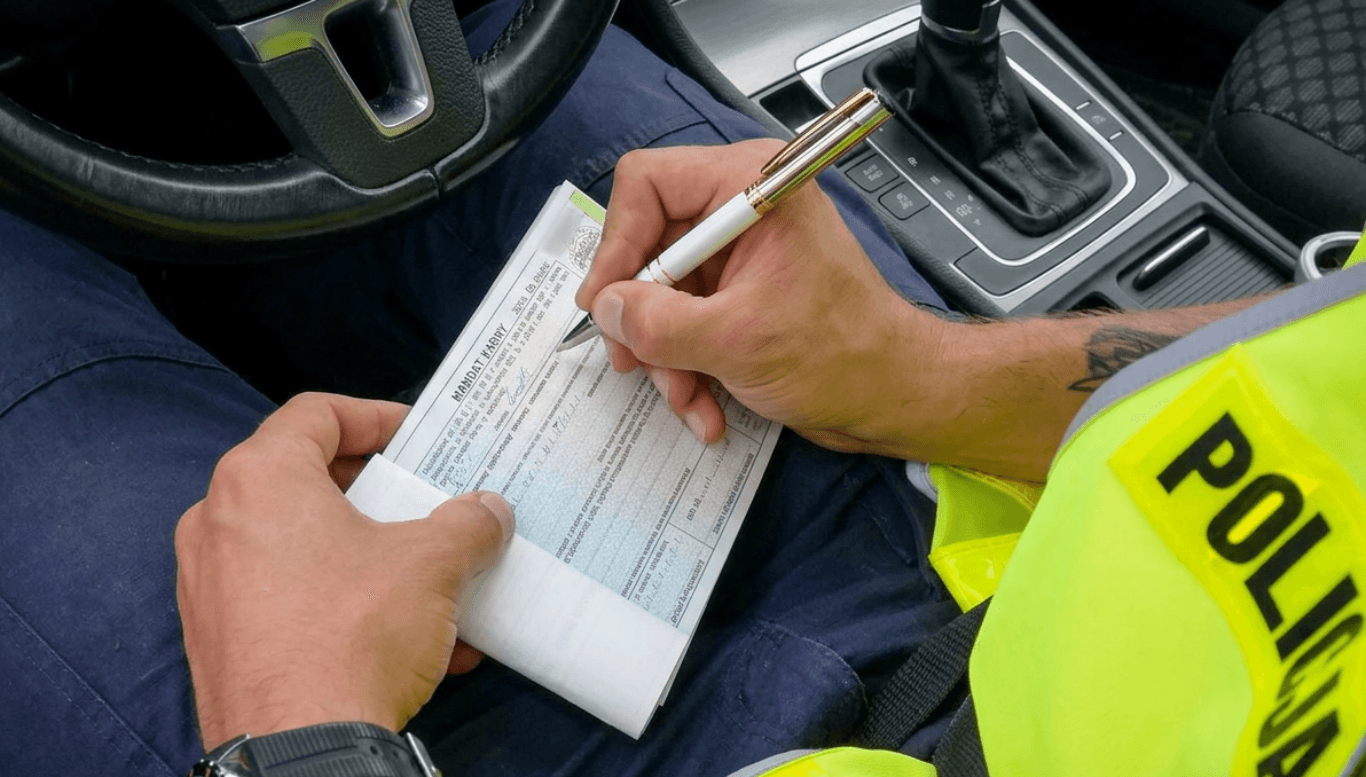
If you commit one of these violations, you will receive a fine notice. It usually takes the form of a paper receipt or a formal decision - handed to you in person or sent by post.
The fine notice will include:
- the grounds for the penalty,
- the amount,
- payment details.
The payment deadline is generally 7 days, though for traffic fines it can extend to two weeks.
The maximum mandat karny in Poland in 2026 is 5,000 PLN. The maximum penalty a court can hand down is 30,000 PLN.
Think the fine was issued without grounds? Appeal it. File a written objection with the authority that issued the penalty. If they agree with your arguments, the fine will be cancelled. If the case is more complex, it goes to court, which makes the final call.
Road Fines: Driver, Passenger, Pedestrian
Traffic violations are probably what Ukrainians in Poland encounter most often - and not only as drivers, though that's where we'll start.
One key rule: for a traffic offence, a driver receives not just a fine but also penalty points. The limit is 24 points - or just 20 for drivers who have held a licence for less than a year. Exceed the limit and you lose your licence, which is often a more painful outcome than the fine itself. Points are cancelled one year after the fine is paid.
Several significant changes came into force in 2026. Exceeding the speed limit by more than 50 km/h outside built-up areas on a single-carriageway two-way road now automatically triggers a three-month licence suspension. Drifting has become a separate offence: fines start at 1,500 PLN, and if the drift creates a hazard in traffic - from 2,500 PLN, plus a three-month suspension. Organising illegal street races carries criminal liability.
Speed fine amounts in 2026:
- up to 10 km/h - 50 PLN
- 11-15 km/h - 100 PLN
- 16-20 km/h - 200 PLN
- 21-25 km/h - 300 PLN
- 26-30 km/h - 400 PLN
- 31-40 km/h - 800 PLN (1,600 PLN for a repeat offence within 2 years)
- 41-50 km/h - 1,000 PLN (2,000 PLN for a repeat offence)
- 51-60 km/h - 1,500 PLN (3,000 PLN for a repeat offence)
- 61-70 km/h - 2,000 PLN (4,000 PLN for a repeat offence)
- over 70 km/h - 2,500 PLN (5,000 PLN for a repeat offence)
Other common fines: using a phone while driving - 500 PLN; failing to give way to a pedestrian at a crossing - 1,500 PLN (3,000 PLN for a repeat offence); unfastened seatbelt for driver or passenger - 100 PLN.
One frequently overlooked offence is fare evasion on public transport. The fine comes from the transport operator - but that doesn't make it less serious. Ignore it and the operator can take the matter to court or pass it to a debt collection agency.
A fare evasion fine typically runs between 150 and 250 PLN. Paying quickly often comes with a discount. Letting it slide is a bad idea: the statute of limitations is one year, after which the case goes to court, and the court adds interest and legal costs on top. The total can multiply several times over. If you then fail to pay the court-ordered amount, the tax authority will collect the money directly from your bank account - with a handling fee added to the sum.
For many Ukrainians it comes as a surprise that traffic rules apply to pedestrians too. In Poland, crossing the road at an unauthorised spot or talking on the phone while crossing can result in a real fine. It's not worth the risk: it's first and foremost a safety issue, and Polish cities are full of cameras - violations rarely go unnoticed.
Cyclists, motorcyclists, and drivers of other vehicles are also full participants in road traffic - they have obligations and can be fined for breaking the rules.
Job vacancies across Poland and Europe, official employment, guidance and support at every stage. To find a vacancy - call: +380503349351, +48525275003


 2026-09-30
 View
View