Public Transport in Poland
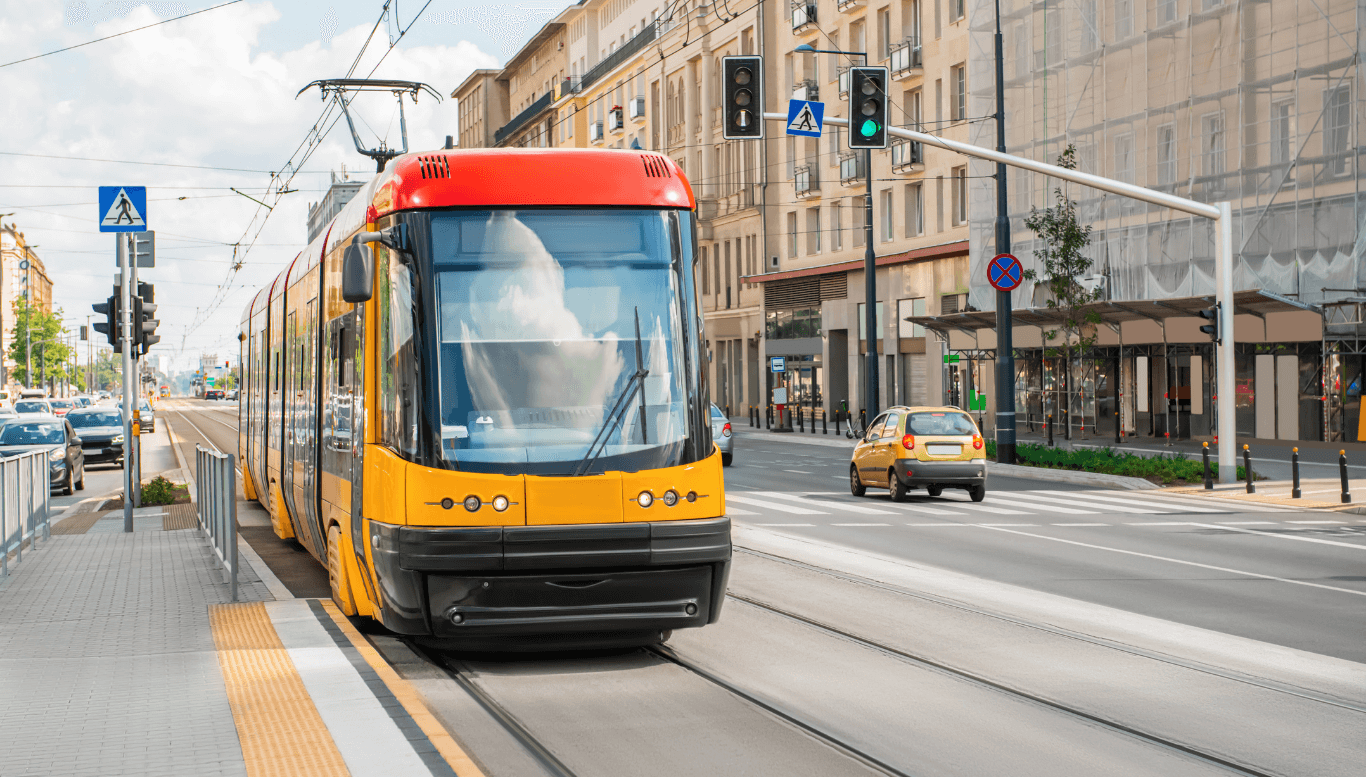 Public transport in Poland is a broad topic with a great deal to cover. What types of transport run in Polish cities? Where can you buy a ticket? What kinds of tickets are available and how much do they cost in 2026? How can you get around without any trouble and avoid a fine?
In this article, we have gathered useful information and answers to frequently asked questions about the public transport system in various Polish cities, payment methods, prices and travel in general.
What Ukrainians should know about public transport in Poland
Characteristics and advantages of public transport in Polish cities.
-
The most popular forms of public transport in Polish cities are buses (the undisputed leader), trolleybuses and trams.
-
A question frequently asked by Ukrainians is: where is there a metro in Poland? The answer: in the traditional sense - only in Warsaw. However, Kraków has a rapid tram tunnel with two underground stations (Dworzec Główny Tunel and Politechnika), and Poznań has the PST rapid tram with an underground station at Rondo Kaponiera. These are genuine hybrids of a tram and a metro, though neither city has a full metropolitan underground system as yet.
-
Good news for those visiting Poland for the first time: public transport runs on schedule, and delays are the exception rather than the rule.
-
Major Polish cities have extensive transport networks with convenient interchange hubs. Taking the previous point into account, planning a journey with connections is relatively straightforward.
-
Public transport in Poland is inclusive, meaning it is adapted to the needs of people with disabilities, parents with young children (including pushchairs) and elderly passengers.
What you should know about tickets in Polish public transport
-
Ticket prices vary between cities, as operators differ from place to place. The cost of a ticket may also differ depending on the type of transport: the price on a bus and trolleybus may be the same, while the metro may charge differently - even within the same city.
-
Major Polish cities often operate different fare zones: travel within a single zone will be cheaper than a journey across several zones. In some cases, a return ticket is available - it will cost more than a single.
-
Public transport tickets in Poland can be purchased: via transport apps (jakdojade.pl, mPay, moBILET, SkyCash Transport, mobiWAWA, zBiletem.pl - the selection of apps depends on the city) and at ticket machines at stops. Remember to validate (skasować) your ticket immediately upon boarding.
-
The standard ticket (normalny) is a single-person ticket valid for a short period. In Warsaw, for example, tickets are available for 20 minutes from validation, 75 minutes, 90 minutes and 24 hours. If you purchase an electronic ticket, its validity runs from the moment of purchase, not the start of your journey - so do not buy it in advance.
-
Short ticket prices (standard / reduced fare, 2026):
- Warsaw: PLN 3.40 / PLN 1.70
- Kraków: PLN 6 / PLN 3 (tariff in force from March 2026)
- Wrocław: PLN 4.60 / PLN 2.30
- Gdańsk: PLN 4.80 / PLN 2.40
- Poznań: PLN 5 / PLN 2.50
- Łódź: PLN 4.40 / PLN 2.20
- Lublin: PLN 3.40 / PLN 1.70
- Szczecin: PLN 3 / PLN 1.50
- Bydgoszcz: PLN 3.80 / PLN 1.90
- Katowice and the entire GZM Metropolis: PLN 4.60 / PLN 2.30 (cheaper via app)
- Rzeszów: PLN 5 / PLN 2.50-3
Prices are reviewed annually, so check the current fares on your city's operator website before travelling.
-
Group tickets (for parties of up to 10 people) and family tickets are available in various Polish cities. Children travel free on public transport in Poland from birth and, as a rule, until 30 September of the year in which they turn 7 - this applies to Ukrainian children as well. To confirm a child's age, it is sufficient to show the controller a Ukrainian birth certificate.
-
Reduced-fare tickets (ulgowe) offer a 50% discount and are valid in most Polish cities. The list of eligible categories may vary, but typically includes children and young people, students, pensioners, people with disabilities and their carers, as well as employees of the city's transport companies. Most concessions require Polish documentation - a Ukrainian disability certificate or pension booklet does not entitle the holder to a discount. The exception is students: a discount can be obtained using an international ISIC card, while those studying at a Polish university obtain a standard Polish student card.
-
If you travel around the city every day - for example, commuting to work - it is worth finding out straight away what season tickets are available in your city. These often represent significant savings of 50-70% compared to single tickets.
-
Travelling without a ticket carries a fine. In Warsaw, for example, it amounts to PLN 266 - approximately 35-40 times the price of a standard ticket. If you pay the fine immediately to the controller, a 40% discount applies; if paid within 7 days, the discount is 30%. The exact amount differs from city to city, but the order of magnitude is broadly similar.
Please note: evading payment of a fine can result in serious sanctions, including a ban on entry to Poland.
Links to public transport authority websites in individual cities.
These websites contain timetables, prices, routes and other up-to-date information.
Advice from Gremi Personal
Install your city's app before you arrive
This will save you time on your first day - you will not need to hunt for a ticket machine or a ticket office.
Job vacancies across Poland and Europe, official employment, guidance and support at every stage.
To find a vacancy - call: +380503349351 +48525275003


 2026-10-22
 View
View
