The Impact of Artificial Intelligence on the Labour Market (AI) — The Future of Work
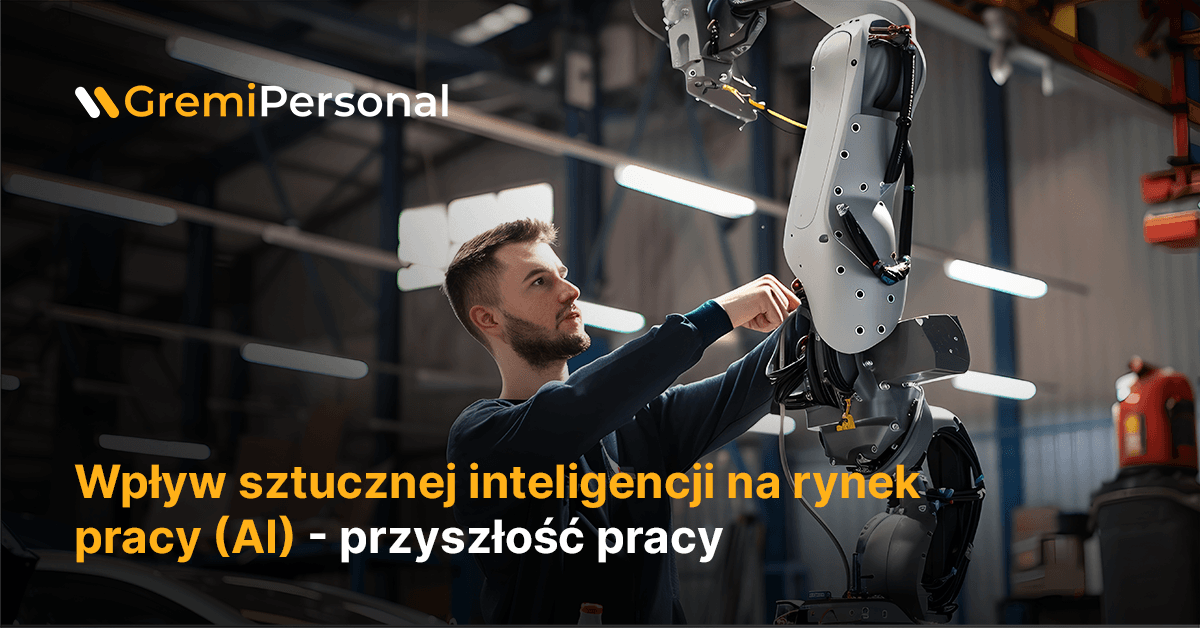
Artificial intelligence is entering the labour market, sparking waves of discussion and extreme emotions. On one hand, we hear about inevitable automation and mass layoffs, raising justified fears about employment stability. On the other, visions of a dramatic leap in productivity and the emergence of entirely new, fascinating professions are taking shape. This technological breakthrough confronts us with a fundamental question: is AI a real threat to our careers, or rather a historic opportunity for growth?
Although fears of job loss dominate the public debate, reality is far more complex. Artificial intelligence rarely eliminates entire professions — more often it takes over repetitive tasks, changing the nature of our responsibilities and opening space for creativity and strategic thinking. Who is most vulnerable to these changes, what competencies will help navigate the new reality, and how can we prepare for the upcoming transformation? Let us look at how AI is truly reshaping the labour market and what it means for each of us.
The Impact of AI on the Labour Market: Opportunity or Threat?
Artificial intelligence is reshaping the labour market, stirring extreme emotions. On one hand there is fear of automation and falling wages; on the other, hope for increased productivity and the creation of new professions. In Poland the debate takes on a specific character, as the adoption rate of GenAI tools stands at just 9.4%. The slow uptake of this technology, while a challenge, also provides time to consciously prepare for the changes ahead.
How Does Artificial Intelligence Increase Productivity?
One of the greatest promises of artificial intelligence is a dramatic leap in efficiency. Algorithms excel at taking over time-consuming and monotonous tasks, such as analysing large datasets, generating reports, or handling simple customer enquiries. This frees employees to unlock their potential and dedicate more time to tasks requiring creativity, strategic thinking, and relationship-building. In this way, automation not only accelerates work but also drives innovation and competitiveness.
Does Automation Lead to Job Reductions?
Fears about job losses are not unfounded. It is estimated that generative AI could automate tasks performed in 5 million positions in Poland, raising concerns about the stability of employment and income. For 41.3% of workers, the greatest threat is precisely the risk of wage reductions. Although technology rarely replaces a person entirely, it may reduce the need for certain roles, raising questions about the future of the labour market and the necessity of adaptation.
Which Professions and Groups of Workers Are Most Exposed to the Impact of AI?
Artificial intelligence affects different professional groups to varying degrees. Those most vulnerable to automation are workers whose duties are based on repetitive and routine tasks. Tools such as the ILO-NASK Index are used to precisely assess the scale of this phenomenon, helping to identify professional groups that need support in adapting to changes in the labour market.
Professions with the Highest Susceptibility to Automation
The professional group most susceptible to automation is office workers. It is estimated that artificial intelligence could take over more than 70% of their tasks. AI automates not only simple activities but also complex intellectual work, such as document management or handling correspondence.
The Impact of AI on Junior Positions and Graduates
The development of AI is influencing companies' recruitment strategies, directly affecting young people starting their careers. Research shows that 39% of managers are reducing hiring for junior positions, because the tasks associated with these roles are the easiest to automate. Although no increase in graduate unemployment is currently observed, a visible trend of reducing entry-level positions is emerging. The youngest group of workers (aged 15–24) both fears the impact of AI the most and uses its tools most frequently.
Why Are Women at Heightened Risk?
Automation poses a greater threat to women's jobs. In Poland, as many as 47.8% of women work in professions with a high susceptibility to AI task-takeover. This phenomenon highlights structural inequalities in the labour market — women more often occupy administrative and office positions, and these are precisely the sectors currently undergoing the fastest technological transformation. As a result, their professional positions are becoming more precarious.
How Does AI Transform Tasks Rather Than Eliminate Professions?
Artificial intelligence rarely leads to the elimination of entire professions. Far more often it changes the nature of duties within individual roles. By taking over repetitive activities, this technology redefines professional roles and simultaneously highlights the value of skills that machines lack. AI becomes a partner that supports people, rather than replacing them.
Automation of Monotonous and Repetitive Tasks
Artificial intelligence excels at automating tedious duties that people may find draining. It takes over tasks such as sorting documents, entering data, or preparing recurring reports, providing genuine relief for employees. Delegating routine processes to machines also helps reduce the number of errors resulting from fatigue or lack of concentration.
New Opportunities for Creative and Strategic Work
When algorithms handle routine tasks, people can focus their attention on activities requiring a strategic approach and creativity. In this kind of collaboration, AI analyses vast datasets and presents conclusions, but it is the human who gives them context, interprets the results, and makes decisions based on them. This is precisely why competencies such as empathy and intuition — which enable relationship-building and the creation of innovations — are becoming ever more valuable.
How to Prepare for Change: The Role of Reskilling and Competency Development
Artificial intelligence is transforming the labour market, requiring adaptation from both employees and employers. Forecasts indicate that more than half of workers will need to acquire new skills to maintain their professional standing. Developing competencies is no longer a choice but a condition for remaining competitive in the new digital reality.
Why Does Lifelong Learning Become Essential?
Rapid technological progress means that existing skills become obsolete at an unprecedented pace. For this reason, continuous knowledge expansion becomes the foundation of a career, not merely an add-on. Continuous development allows not only keeping up with changes but also actively shaping them. Employees who are open to learning are more flexible, adapt more easily to new tools, and their value in the labour market grows.
Investments in Employee Training and Education
The effective implementation of AI in a company depends on team readiness, making investment in team development inevitable. Employees need training programmes that allow them to acquire both technical knowledge and develop soft skills. Combining these two areas enables the full utilisation of intelligent systems' potential. The most in-demand competencies include:
- working with AI systems,
- data analysis,
- cybersecurity,
- critical thinking,
- creativity,
- collaboration skills.
These are precisely the abilities that facilitate managing the change process and enable effective collaboration with intelligent machines.
What Are the Competencies of the Future in the Age of Artificial Intelligence?
Adapting to the labour market in the AI era means continuously developing new skills. The greatest advantage goes to those who can combine technical knowledge with unique human talents. The future of employment is built on human-machine collaboration, where technology expands our capabilities rather than replacing us entirely. Value goes to those abilities that artificial intelligence cannot replicate — strategic thinking, empathy, and creative problem-solving.
Technological Competencies and Soft Skills
To maintain a stable professional position, it is necessary to develop two types of competencies: technical (hard) and social (soft). The former allow confident use of AI-based tools, which are becoming the standard in many companies. Soft skills, meanwhile, remain irreplaceable in building relationships with clients and business partners, managing complex interactions, or making decisions in ambiguous situations.
Hard Skills: Data Analysis and Machine Management
The most sought-after hard competencies revolve around technology, and especially data. In the labour market, the ability to analyse large datasets (Big Data) and an understanding of machine learning principles — going beyond the basics of programming — are highly valued. Employers prize AI systems experts who can not only manage algorithms but also assess their performance and optimise it.
Indispensable Social Competencies: Creativity and Emotional Intelligence
Certain abilities remain exclusively human, giving people an advantage over machines. These include:
- creativity,
- critical thinking,
- emotional intelligence,
- empathy.
These qualities enable the creation of new solutions, build trust within teams, and form the basis of effective leadership. This is confirmed by the opinions of Polish employers — 33% of them believe that AI will not replace people in management, and 35% say the same for customer service.
What New Jobs Does Artificial Intelligence Create?
Although discussions about artificial intelligence often focus on automation, this technology simultaneously generates demand for entirely new experts. Positions are emerging in fields that did not exist until recently, covering the design and supervision of AI systems or their use in solving complex business problems. This technological revolution requires specialists who combine technical knowledge with strategic thinking.
Jobs of the Future Related to AI and Data
Data is at the heart of artificial intelligence, which is why demand for data engineers and analysts and machine learning experts is growing. They build, train, and interpret algorithmic models that form the foundation of AI systems — for example, tools that forecast market trends.
Alongside technical roles, specialisations related to ethics are emerging. Oversight is becoming essential to guarantee that algorithms operate fairly and transparently. Specialists in this field identify and remove biases in data and create frameworks for the responsible use of technology. They are supported by lawyers who draft regulations governing the operation of AI.
The Growing Importance of Green Jobs
Digitalisation is increasingly going hand in hand with environmental responsibility, creating the phenomenon of dual transformation. Artificial intelligence helps optimise energy consumption, enables intelligent grid management, and allows precise monitoring of our planet's condition. As a result, companies can better forecast resource usage and reduce their negative impact on the climate.
The combination of technology and ecology gives rise to so-called green jobs. These require a unique set of skills, combining digital competencies with knowledge of environmental issues. Such specialists, for example, create intelligent waste management systems or design energy-efficient buildings where data analytics directly serves environmental protection.
How Is the Role of Managers and Business Leaders Changing?
Artificial intelligence is redefining leadership. Managers are transitioning from supervisors to managers of complex hybrid teams, in which people work alongside intelligent systems. Their new task is to use technology in a way that amplifies human potential rather than replacing it — designing processes in which algorithms support creativity and help achieve better results.
This transformation requires leaders to develop new competencies. In a dynamic environment where technology intertwines with human emotions, demand for emotional intelligence is growing. Although managers must understand how new tools work, their true challenge is building a culture open to change and safely guiding employees through the transformation process.
Contemporary leadership carries enormous responsibility, particularly in the context of the ethical implementation of artificial intelligence. Leaders must ensure:
- transparency in how algorithms operate,
- data privacy protection,
- active counteraction against digital biases.
A further challenge is a flexible approach to work organisation and accommodating new models such as the Gig Economy. A true leader can combine technological vision with empathy, creating an environment in which humans and machines collaborate harmoniously.


 2026-08-24
 View
View