Salaries of Ukrainian Refugees in Poland Differ from Those of Pre-War Migrants — Research
In 2023, the most common salary bracket for both Ukrainian refugees and pre-war migrants was 3,000 — 4,000 zlotys (28,000 — 38,000 hryvnias), however 49% of refugees
declared earnings below 3,000 zlotys, compared to just 21% among pre-war migrants. At the same time, refugee wages have been growing year on year, driven by record-low unemployment in Poland and successive increases in the minimum wage. This is one of the findings of a report published by the National Bank of Poland (NBP), analysed by the analytics centre of the international recruitment agency Gremi Personal. A total of 3,658 questionnaires were collected.
According to the survey conducted by the NBP since 2019, the average salary of migrants who arrived in Poland before the war increased by approximately 38% between 2019 and 2022, and by 6% between 2022 and 2023. The average net salary received by Ukrainians in Poland amounts to approximately 33,000 hryvnias.
Before the full-scale war in Ukraine, 94% of Ukrainian migrants in Poland were employed, compared to 64% of wartime migrants.
An important issue is also the family situation of migrants who arrived in Poland after 24 February 2022. The vast majority of all refugees were women — 78%, while male refugees accounted for 22%. Women who remained in Poland with children and no other family members represented 26% of all refugees, followed by 12% of women who stayed with children and a partner (husband). However, a relatively high proportion of women — 32% in total — are in Poland without children or a partner, either alone or only with other family members.
Although Ukrainian male refugees are significantly fewer in number, they fare considerably better on the Polish labour market. A larger share of them is employed (71% vs 61%), and only 15% of men are unemployed, compared to 27% of women.
"On one hand, this may be linked to higher demand for jobs in male-dominated occupations; on the other, female refugees more often
take care of children" — says Anna Dżobolda, Head of Recruitment at Gremi Personal.
Interestingly, pre-war migrants were predominantly employed in occupations requiring specialist qualifications but not necessarily higher education (welders, machinists, electricians, etc.). Meanwhile, refugees who arrived in Poland and found work turned out to be, on average, people with a relatively high level of education — yet the vast majority of them took up simple, low-skilled jobs.
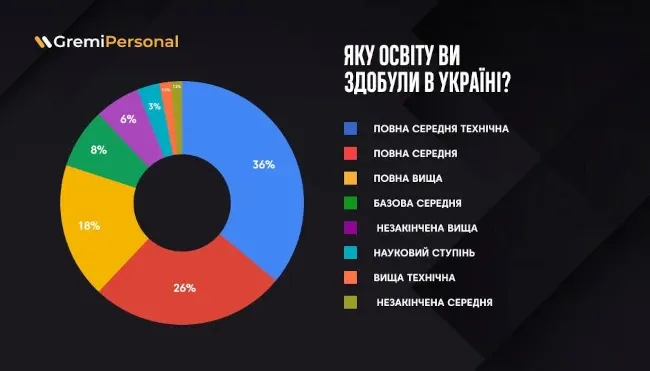
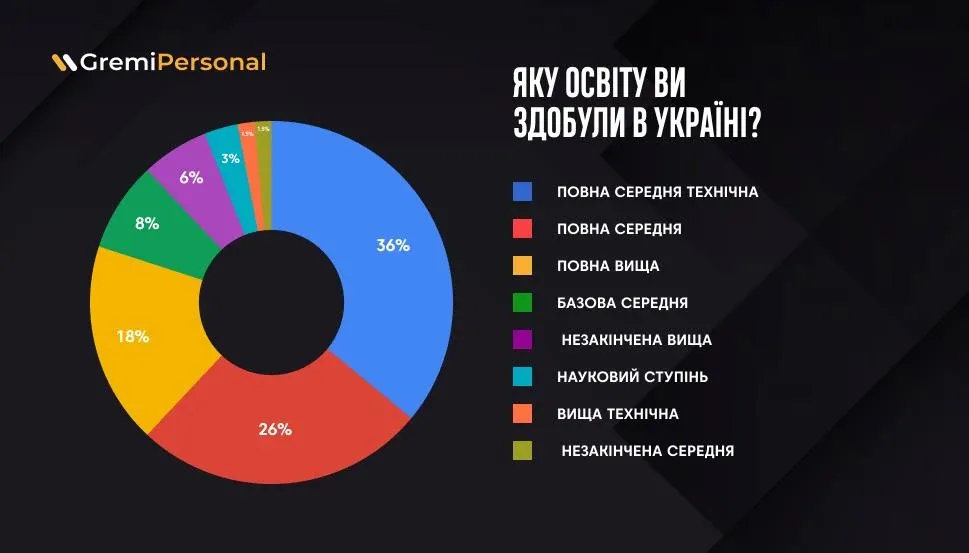
The Gremi Personal analytics centre also surveyed employed Ukrainians about their level of education obtained in Ukraine (480 respondents participated in the survey).
36% have secondary technical education — the highest share across all categories. 26% completed full secondary education, 18% hold a university degree, 8% have basic secondary education, and 6% have incomplete higher education. 3% hold a postgraduate or academic degree, with 1.5% each for "higher technical" and "incomplete secondary".
"The salaries of Ukrainian refugees in Poland depend largely on increases in the minimum wage in the Polish economy and are rarely linked to the level of education obtained in Ukraine, regardless of its level. However, highly skilled Ukrainians who have a sufficient command of Polish can compete with Polish nationals for available positions" — adds Anna Dżobolda.


 2026-09-24
 View
View