How Attacks on Energy Infrastructure Have Affected Ukrainians' Decisions to Stay in Ukraine for the Winter – Survey
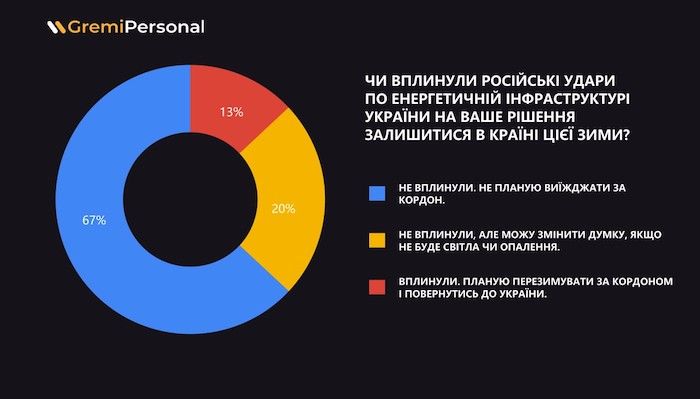
The analytical centre of the international recruitment company Gremi Personal is currently studying the attitudes of Ukrainians regarding their plans for the winter. Residents of the regions most affected by shelling of critical infrastructure were surveyed, namely: Kharkiv, Vinnytsia, Lviv, Dnipropetrovsk, Zaporizhzhia, Kyiv, Ivano-Frankivsk, and Zhytomyr oblasts. The online survey was completed by 1,250 women aged 18 to 65.
67% of respondents say that despite everything they will remain within Ukraine over the winter. Meanwhile, 20% say they do not plan to relocate, but if problems with heating, electricity, or water supply prove long-term in nature, they will be forced to temporarily move abroad. The remaining 13% of respondents are those who are already planning to leave and intend to return in spring.
«Despite Russian attacks, a number of factors indicate that the migration situation has not changed radically so far. Interestingly, a great many Ukrainians currently seeking work in Poland emphasise that they are looking specifically for seasonal employment in order to return to Ukraine in the near future with some financial savings» – says Anna Dzhobołda, Head of Recruitment at Gremi Personal.
According to Border Guard data, more than 5 million people have crossed from Poland into Ukraine since 24 February. Poland's government commissioner for refugees, Paweł Szefernaker, recently stated that approximately 22–23 thousand people cross the border each day, of whom only 5% file claims indicating they are refugees. By comparison, in mid-August the same number – around 22,000 Ukrainians – were crossing the border daily. This confirms the absence of mass migration.
Poland must be ready for any outcome, but Ukrainians are doing everything possible to prevent mass migration from occurring. He also noted that around 80,000 refugees are currently living in collective accommodation facilities – namely commercial halls and guesthouses – and that from January next year Poland plans to shift to covering 50% of accommodation costs, eventually expecting residents to fully cover their own stay in Poland.
According to data from Prime Minister Mateusz Morawiecki, more than 1 million Ukrainians have been officially employed in Poland since the full-scale war began. Of these, only 80,000 require social housing – less than 8%. These figures indicate that the remaining Ukrainians have independently resolved their accommodation and employment needs.


 2026-09-24
 View
View