In 2025, Poland's Minimum Wage Will Rise Only Once. How Much Will the "Minimum" Be?
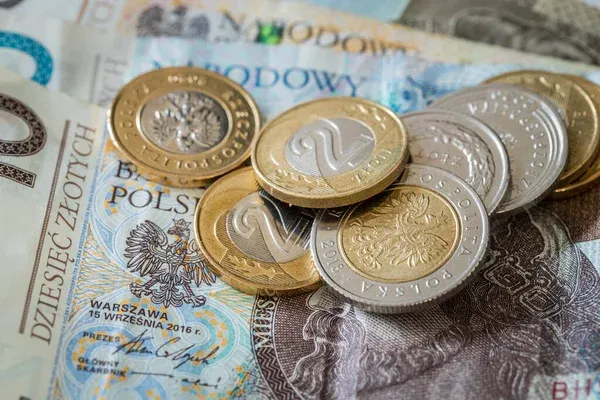
On 1 January 2025, Poland's minimum wage will increase – for the eighth consecutive year. However, next year's raise will differ slightly from previous years: it will happen in one stage rather than two, as has been the case for the past two years.
The minimum wage is the lowest amount set by law that an employer is required to pay an employee working under an employment contract.
The minimum wage in Poland and other countries is the primary guarantee protecting workers from exploitation by employers.
According to data from Poland's Central Statistical Office (GUS), 1.5 million workers receive the minimum wage in Poland – approximately 13% of all employees. This figure is relatively high compared to other EU countries. According to Eurofound, on average one in ten workers in the EU earns the minimum wage.
Minimum Wage and Minimum Hourly Rate in Poland in 2025
On 12 September 2024, the Polish government decided to raise the minimum wage in Poland.
The regulation published in the Journal of Laws (Dziennik Ustaw) specifies that from 1 January 2025:
→ the minimum wage will be 4,666 PLN gross;
→ the minimum hourly rate will be 30.50 PLN gross.
As a reminder, the last increase in the minimum hourly rate and wage took place on 1 July of this year. In 2024 and 2023, Poland raised both the minimum wage and hourly rate twice a year – in January and July.
At present, through the end of the year, the minimum wage in Poland stands at 4,300 PLN gross. The minimum hourly rate in the second half of 2024 is 28.10 PLN gross per hour.
Therefore, in 2025 the minimum wage will increase by 366 PLN, and the minimum hourly rate will rise by 2.30 PLN.
What Is Gross and Net Pay?
Poland's compensation system features two key concepts: "gross" and "net" pay (or rate).
The term "gross" in the context of salary or hourly rate refers to the total amount that the employer agrees to pay the employee under the employment contract. This figure is stated before the deduction of any taxes, social insurance contributions, or other mandatory payments.
It is worth noting that Polish employers typically state the "gross" salary or rate in employment contracts, regardless of the type of contract – whether an employment agreement (umowa o pracę) or a civil-law contract (umowa zlecenie).
In contrast to "gross," "net" pay or rate is the amount the employee actually receives "in hand" after all required deductions. These deductions include personal income tax, social and health insurance contributions, and other mandatory payments required under Polish law.
The net amount may vary between employers, as it depends on the health insurance contribution rate applicable to a given company**.**
It is also worth noting that students under 26 years of age are exempt from tax deductions, meaning their gross earnings equal their actual take-home pay.
How Has Poland's Minimum Wage Grown Over the Last 20 Years?
1 January 2025 – 4,666 PLN gross
1 July 2024 – 4,300 PLN gross
1 January 2024 – 4,242 PLN gross
1 July 2023 – 3,600 PLN gross
1 January 2023 – 3,490 PLN gross
1 January 2022 – 3,010 PLN gross
1 January 2021 – 2,800 PLN gross
1 January 2020 – 2,600 PLN gross
1 January 2019 – 2,250 PLN gross
1 January 2018 – 2,100 PLN gross
1 January 2017 – 2,000 PLN gross
1 January 2016 – 1,850 PLN gross
1 January 2015 – 1,750 PLN gross
1 January 2014 – 1,680 PLN gross
1 January 2013 – 1,600 PLN gross
1 January 2012 – 1,500 PLN gross
1 January 2011 – 1,386 PLN gross
1 January 2010 – 1,317 PLN gross
1 January 2009 – 1,276 PLN gross
1 January 2008 – 1,126 PLN gross
1 January 2007 – 936 PLN gross
1 January 2006 – 899 PLN gross
1 January 2005 – 849 PLN gross
1 January 2004 – 824 PLN gross
How Has Poland's Minimum Hourly Rate Grown in Recent Years?
1 January 2025 – 30.50 PLN/hour gross
1 July 2024 – 28.10 PLN/hour gross
1 January 2024 – 27.70 PLN/hour gross
1 July 2023 – 23.50 PLN/hour gross
1 January 2023 – 22.80 PLN/hour gross
1 January 2022 – 19.70 PLN/hour gross
1 January 2021 – 18.30 PLN/hour gross
1 January 2020 – 17 PLN/hour gross
1 January 2019 – 14.70 PLN/hour gross
1 January 2018 – 13.70 PLN/hour gross
1 January 2017 – 13 PLN/hour gross
Looking for a job in Poland with a fair salary? Call us: [+38 (050) 334-93-51 or +48 525 275 003](tel:+38 (050) 334-93-51 or +48 525 275 003)[+38 (050) 334-93-51 or +48 525 275 003](tel:+38 (050) 334-93-51 or +48 525 275 003)[+38 (050) 334-93-51 or +48 525 275 003](tel:+38 (050) 334-93-51 or +48 525 275 003)


 2026-11-03

 View

