Ukrainians Who Broke Polish Law Face Deportation to Ukraine
"No more leniency for foreigners. Expulsion and a permanent ban for breaking the law" – these were the headlines that recently appeared in leading Polish media, including Rzeczpospolita.
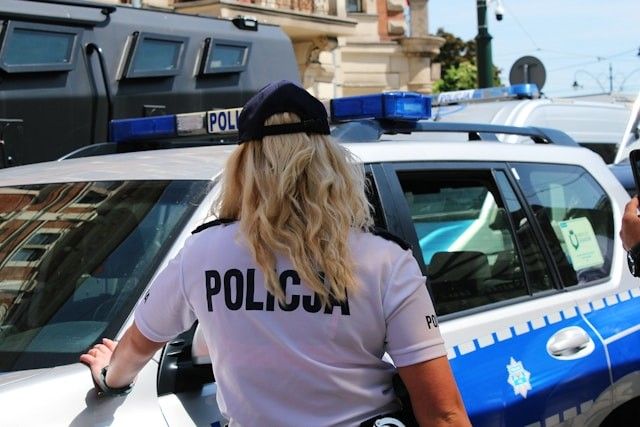
Poland's Border Guard will expel foreigners who violate the rules – they will be sent back to their home country immediately upon release from prison.
Poland is primarily targeting smugglers and drivers convicted of drunk driving. After serving their sentences, such individuals will be immediately put on a plane or taken to the border with a permanent Schengen Area entry ban.
Here are the details.
As Part of Its Fight Against Illegal Migration, Poland Is Expelling Smugglers
Szymon Mościcki, spokesperson for the Silesian Division of the Border Guard, told Rzeczpospolita that smugglers who, a year ago, were mass-transporting illegal migrants along the Balkan route have already started to be expelled from Poland.
The article cites examples of how couriers and organizers of human smuggling are being expelled from Poland.
For instance, a Georgian man who recently served time in Gliwice prison is being returned to his home country. He was apprehended a year ago in Zwardoń while illegally transporting a group of Turks by bus. The court convicted him of smuggling and participation in an organized criminal group. The same fate awaits a Syrian national who also facilitated people crossing the Polish-Slovak border and attempted to flee when caught.
The number of convictions has grown, as a year ago the Slovak border section was most frequently used to transport illegal migrants seeking to enter Germany from southern Poland. Migrants were sent back within 48 hours under the so-called simplified readmission procedure. Smugglers, however, were taken to court and, after sentencing, imprisoned.
Szymon Mościcki notes that once their sentences are completed, criminals will be mandatorily and forcibly returned.
The swift deportation has been made possible by close cooperation between the Border Guard and prisons. Prisons immediately notify authorities of every foreigner leaving their walls, and law enforcement quickly deports them before they can "disappear into the crowd." Such individuals are also banned from re-entering the Schengen Area for up to ten years.
Piotr Niemiec from the Vistula Division of the Border Guard stated that those posing a threat to national security, those convicted of criminal group activity, and repeat rule-breakers are all being taken to the border. Increasingly, these are citizens of Ukraine and Belarus.
Ukrainians Are Being Deported from Poland for Drunk Driving
It is not only smugglers and criminal groups who are under scrutiny – Poland has no intention of going easy on drunk drivers. We previously reported on how the country toughened penalties this year for driving under the influence of alcohol or drugs. The next step: Poland is expelling those who have committed such offences multiple times.
Rzeczpospolita, for example, cites the case of a 42-year-old repeat offender who drove under the influence of alcohol despite a lifetime driving ban. After his release from prison in Strzelce Opolskie, the man was taken to the Ukrainian border and sent home. Recently, men aged 27 and 29 who "systematically violated public order in Poland" by repeatedly driving drunk, as well as a 44-year-old man detained in Nysa upon release from prison, were also deported.
– Their behaviour shows they have no intention of respecting the rules in force in Poland, – Mościcki stressed.
Beyond smugglers and repeat drunk drivers, there are other grounds for deportation. Poland, for example, expelled a Georgian man who served two years for attempted rape. Border Guard officers from the Sosnowiec station detained him in Wojkowice as he was leaving the local prison.
It is worth noting that, according to Andrzej Józwiak, spokesperson for the Border Guard Headquarters, by June of this year more than 500 foreigners had been forcibly escorted to the state border, compared with 1,200 in the same period last year.
Key Facts
Last year, 17,300 foreigners committed crimes in Poland (an increase of 2,400 compared to the previous year).
Nearly one in three of them was convicted of driving under the influence of alcohol – totalling 4,900 individuals.
Among foreign nationals caught drink-driving, 70% were Ukrainian and 25% were Georgian.
There is also an overall rise in the number of imprisoned foreigners. Most are serving sentences for offences against road safety (drunk driving and accidents), robbery, assault, and murder. Ukrainians, Georgians, and Belarusians are the most prevalent groups.


 2026-09-24
 View
View