How Long Does It Take Ukrainians in Poland to Learn the Language: Survey Results
24.03.2025
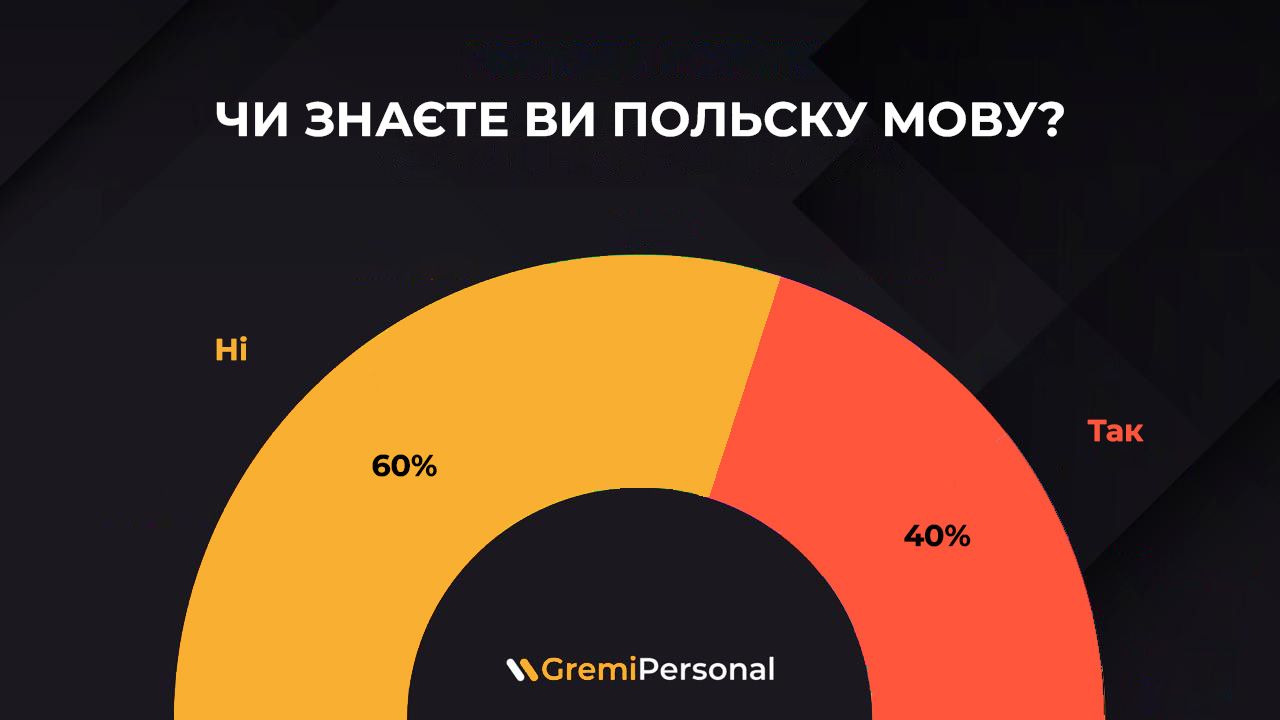
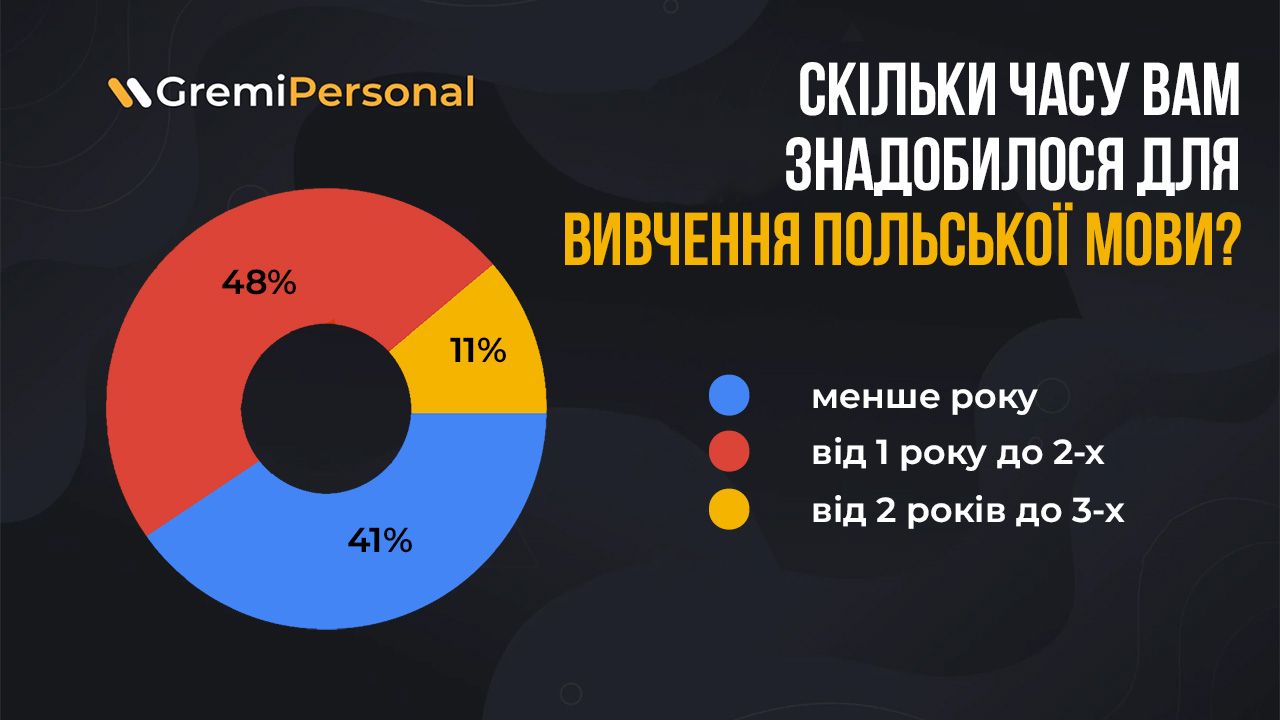
40% of Ukrainians in Poland speak Polish. Of these, 48% say it took them one to two years to learn the language, 41% spent less than a year, and 11% studied for two to three years. These findings were published by the analytical centre of the international recruitment company Gremi Personal.
The level of language proficiency among Ukrainians in Poland remains predominantly medium or low.
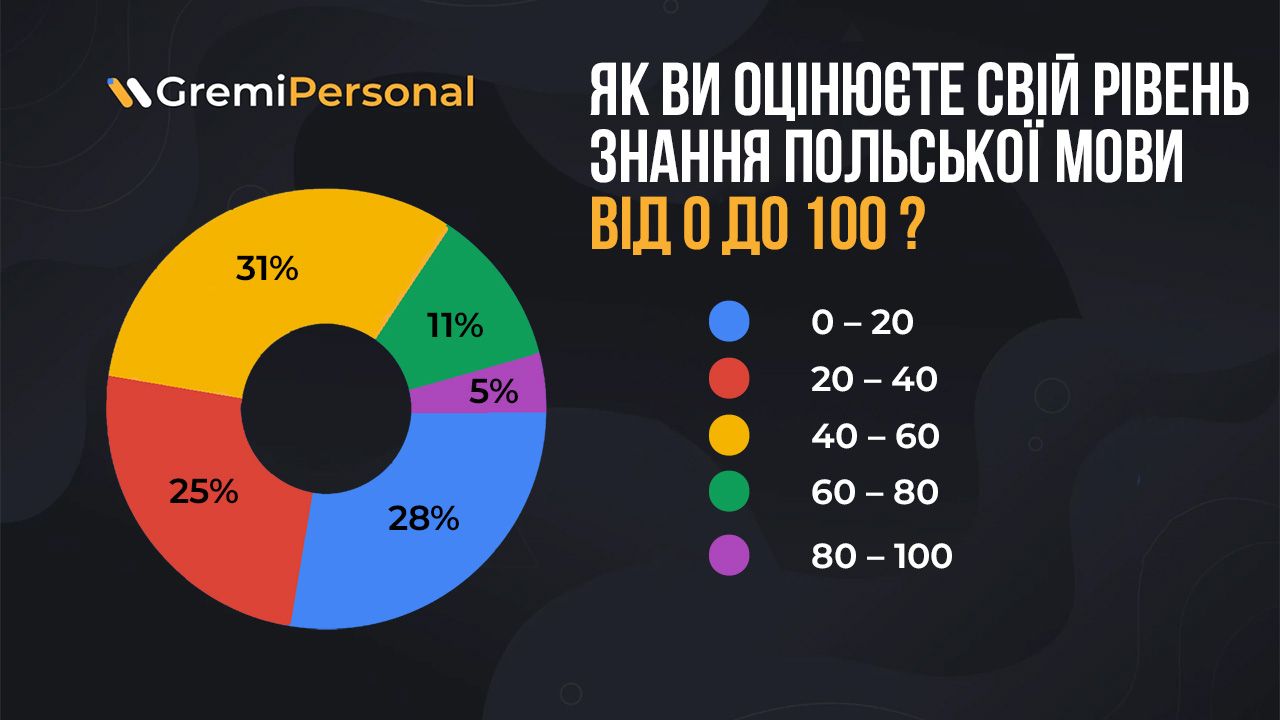
31% of respondents rated their language skills in the range of 40–60 out of 100, indicating an intermediate level. 28% of participants gave themselves 0–20 points, pointing to a very low level of knowledge. Another 25% placed their skills at 20–40, also reflecting limited ability to communicate. A higher level (60–80) was reported by 11% of respondents, while only a small share — fewer than 5% — rated their knowledge at 80–100.
These results confirm the analysts' observations: despite the gradual adaptation of Ukrainians in Poland, the pace of language acquisition remains slower than experts predicted three years ago.
Among the respondents, 40% have vocational education (trade school, vocational college, technical school), 36% have secondary education, and 22% completed higher education (bachelor's, specialist, or master's degree). 2% hold postgraduate or doctoral qualifications, indicating the presence of highly skilled professionals.
"These figures show that Ukrainians possess strong educational potential, enabling them to occupy a wide range of labour market segments — from blue-collar positions to skilled roles. This educational profile is a valuable resource for the Polish economy, as Ukrainians adapt quickly to the local market, fill shortages in key sectors, and have genuine career development potential", — notes Yurii Hryhorenko, representative of the Gremi Personal analytical centre
The survey was conducted via online questionnaire between January and February 2025. The sample was formed using stratified selection, ensuring proportional representation of respondents across key socio-demographic characteristics. The total number of respondents was 1,085, with a statistical margin of error not exceeding ±3.1% at a 95% confidence level.


 2026-09-24
 View
View