What Can You Bring Across the Border to Poland?
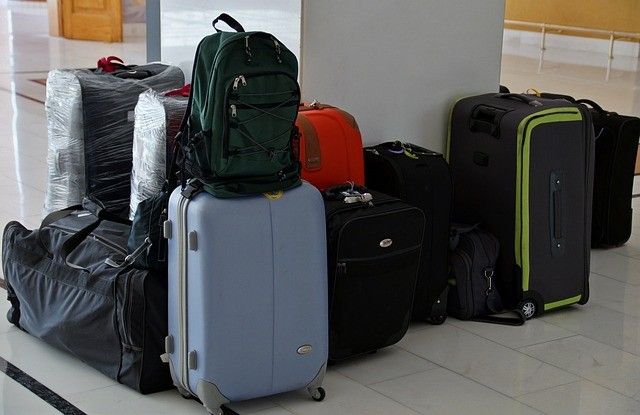
What can you bring across the Ukrainian-Polish border? Which items and products will not raise questions from Polish customs officers? What is prohibited from crossing the border?
How to bring medications, electronics, and cash?
Today we answer all these questions so you won't have any problems at customs.
What Is Prohibited from Being Brought into Poland?
Although Poland has no shortage of food products and many Ukrainian goods or their equivalents can be purchased locally, people still try to bring something tasty and familiar through customs.
We emphasize — it is food that causes the most problems at the border.
Strictly prohibited items when entering Poland:
⇒ meat and meat products (sausage, lard, frankfurters);
⇒ meat-based canned goods (both store-bought and homemade);
⇒ milk and dairy products.
The only exceptions in these categories are products containing milk and meat from infant formula or food for an animal travelling with you. However, such products must not exceed 2 kilograms.
What about sandwiches? If two slices of bread contain sausage and cheese (i.e., meat and dairy products), that can also be a reason for customs officers to object. In practice, officers often overlook this, which leads people to believe that sandwiches can be brought freely.
In addition to meat and dairy, the following are also prohibited:
⇒ chocolate bars (exception — one opened bar per person);
⇒ narcotic substances;
⇒ chemical and toxic products;
⇒ pornographic materials;
⇒ weapons.
Also keep in mind that valuable personal items are subject to customs duty:
⇒ for persons under 15 years of age — items worth more than €150;
⇒ for persons 15 years and older — items worth more than €300.
Cash may be carried up to $10,000.
What Can Be Brought into Poland and in What Quantities?
If you still intend to bring food products into Poland, there is good news — some of them are actually allowed.
These include:
⇒ fresh fruit and vegetables – up to 5 kg per person, with the exception of potatoes;
⇒ eggs and egg-containing products (up to two kilograms per person);
⇒ coffee (up to 500 grams) and tea (up to 100 grams);
⇒ honey (up to 2 kg);
⇒ sweets and any confectionery items in which the milk and chocolate content does not exceed 20% — up to 2 kg.
If you smoke, you may bring one of the following into Poland:
⇒ cigarettes – 40 pieces (2 packs);
⇒ e-cigarettes — 2 pieces;
⇒ cigars — 10 pieces;
⇒ tobacco — 50 g.
As for alcohol, you may bring:
⇒ 1 litre of strong spirits (over 22% alcohol content);
⇒ beverages with up to 22% alcohol content – 2 litres;
⇒ wine – 3 litres;
⇒ beer – 16 litres.
Let's also cover the rules for bringing medications into Poland.
Without a prescription, you may carry non-potent medicines:
⇒ painkillers;
⇒ motion sickness tablets;
⇒ vitamins, etc.
For more serious medications, a prescription is required — for example, tranquillizers and psychotropic substances must be accompanied by a prescription.
If you are undergoing treatment with prescription drugs, you will need to go through the declaration procedure.
To do so, provide customs officers with the following documents:
⇒ a copy of your medical records;
⇒ a prescription from your doctor;
⇒ a receipt from the pharmacy where you purchased the medication;
⇒ a medical certificate stating the diagnosis, the name of the medication, the required quantity, and the dosage schedule at the time of travel. The certificate must be stamped by the medical institution and signed by your doctor and the chief physician.
The permitted volume of medications to import is 500 millilitres.
Poland, like other EU countries, prohibits the import of medicines containing codeine or ephedrine. These include Nurofen, Ketanov, and Broncholitin — medications popular in Ukraine. Before travelling, carefully check the composition of any drugs you plan to bring.
What electronic devices can be brought into Poland without declaration?
One person may freely bring: a mobile phone, a photo or video camera, a portable speaker, and a laptop.
If you are carrying more than one unit of any type of device, you must go through the declaration procedure.
What Are the Penalties for Violating Customs Rules in Poland?
Upon detecting a violation, Polish customs officers may:
- Confiscate the prohibited items.
- Impose a fine of €50 per unit (for example, for each "extra" bottle of alcohol).
- In extreme cases, you may be deported and banned from entering not only Poland but also other EU countries for a period of 5 years.
We would add that customs problems are sometimes the very reason for passenger transport delays. Follow the rules — and everything will be fine!
Looking for work in Poland? Call us: +38 (050) 334-93-51 or +48 525 275 003


 2026-11-03

 View

