Factory Jobs in Poland: Everything You Need to Know About Vacancies, Conditions and Salaries
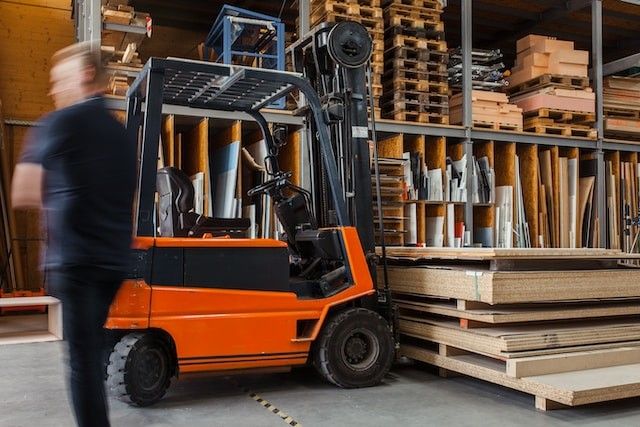
Factory and manufacturing job vacancies make up the bulk of available positions in Poland. This type of work is a solid employment option for Ukrainians — whether you have no experience or language skills, or whether you have some work history and speak Polish.
What should you know about working in manufacturing? What factory jobs in Poland are available for men, women, couples or students? What are the pros and cons of this sector? We cover all of this below.
What You Should Know About Manufacturing in Poland
Over the past decade, Poland's economy has been growing steadily, and industrial manufacturing has played a significant role in that growth. At some point, Polish businesses invested heavily in modernising their production capacity, which made goods faster to produce and cheaper to manufacture. This is also good news for workers — innovative facilities have fewer physically demanding, "dirty" processes and offer more comfortable working conditions.
The development of agriculture indirectly supports industrial growth, as food processing plants benefit from locally sourced, affordable raw materials.
Foreign workers — Ukrainians in particular — also contribute meaningfully to this growth. Companies are eager to hire them not just because of a shortage of local candidates, but because of their motivation and strong work ethic. This is great news: in many Polish factories and plants you will meet fellow Ukrainians, which makes adapting to the job much easier. Employers are also accustomed to working with foreigners, know how to manage multicultural teams, and are responsive to their needs.
In which industrial sectors in Poland can you find jobs? The most in-demand areas include:
- food processing — poultry plants, fish factories, processing facilities (semi-finished product manufacturing), etc.;
- mechanical engineering, including automotive manufacturing;
- shipbuilding;
- light industry (textile and garment);
- wood processing and paper manufacturing;
- chemical and pharmaceutical industry.
Where are factories located in Poland?
The simple answer — everywhere. Manufacturing facilities are often found not only on the outskirts of towns or in smaller cities, but also within large urban centres such as Warsaw, Bydgoszcz, Kraków, Gdańsk, Wrocław and others.
Who owns the factories and plants with job vacancies?
They are most commonly private (non-state-owned) enterprises belonging to Polish or foreign companies. It is worth noting that alongside large corporations with multiple plants and hundreds or thousands of employees, Poland also has small family-run operations employing up to 30–50 workers. In both cases, hiring foreign workers is usually handled through specialised recruitment agencies such as Gremi Personal.
Factory and Plant Job Vacancies: What to Pay Attention To
So a job at a factory or plant in Poland has caught your eye and you want to apply.
What should you look out for? What nuances are worth knowing, and which details in the job description can't be overlooked?
1. Pay.
Attracted by a high hourly rate? Those looking for work in Poland for the first time may not be aware of the difference between brutto and netto rates. The brutto rate is always higher, because it is the amount earned per hour before taxes are deducted.
To avoid misleading our clients, we always list the netto rate in our job descriptions — that is, the money per hour of work that you will actually receive in hand.
2. Hours worked and monthly salary.
High rate but few hours? You may not earn as much as you expect.
Job descriptions with hourly pay usually specify the monthly number of hours to be worked. Let's calculate how much you could earn with different workloads:
-
You're offered a rate of 18 PLN/h net, with 250–300 hours per month.
18*250 = 4,500 PLN, 18*300 = 5,400 PLN. So you could earn 4,500–5,400 PLN per month.
-
Another job offers 21 PLN/h net, but only 180–230 hours per month.
21*180 = 3,780 PLN, 21*230 = 4,830 PLN. Salary — 3,780–4,830 PLN.
Which offer is better? It depends on you and how willing you are to work intensively or prefer a lighter schedule. We'll talk about shift patterns below.
3. Schedule.
In most factories and plants, workers are employed 5–6 days a week. Days off can be flexible or fixed (Saturday–Sunday). The average shift lasts between 8 and 12 hours.
What should you be aware of?
- Workers rarely get to choose their own shifts and days off — that is typically up to team leaders or production managers who organise workflow. If having a specific schedule is important to you, clarify this when selecting a job. This is exactly why factory work is less suitable for students or mothers with young children — these groups often need more flexibility or a predictable routine.
- Factories typically operate around the clock, so night shifts exist in almost every facility. There can also be partially nocturnal shifts — for example, work ending at midnight or 2:00 a.m. Sometimes a shift starts as early as 5:00 or 6:00 a.m., which is also worth being prepared for. If there are no night shifts at all, this is usually highlighted as a benefit in the job description.
- Worth mentioning separately is the concept of piecework / seasonal contract work. This is seasonal employment — the plant itself usually operates year-round with permanent staff, but the schedule for such roles tends to be very intensive, often with almost no days off. The idea is that the worker has consciously come for 2–3 months to earn money and then return home.
- Many workplaces may also offer overtime or additional night hours. These are sometimes paid at a higher rate. It doesn't have to be in your usual area — you might work as a packer on the production line, then stay on to do washing or cleaning after your shift.
4. Workload and difficulty.
The previous two points already touched on workload — even a fit, young person may struggle to cope with a schedule that leaves minimal rest time. We therefore recommend thinking carefully about how many monthly hours you can realistically handle. Maybe 320–350 hours is simply not for you? Think it through.
When choosing a vacancy, also pay attention to:
-
temperature conditions in the workspace (some food processing plants have halls with sub-zero temperatures, while bakeries can be very hot);
-
the working posture required — whether the job involves standing, sitting or moving around;
-
whether you need to lift heavy objects (this can be hard on women, older workers, or people with back problems);
-
whether the workspace contains allergens (not relevant to everyone, but if you are at risk — it's worth knowing).
These details are usually included in the job description, in the employee requirements section, so don't skip them and take them seriously.
5. Accommodation.
There are really only two options — either the employer provides accommodation, or they don't. In the latter case, if you have no one to stay with, finding a place on your own as a newcomer can be quite challenging. We at Gremi Personal know this, which is why all our job offers include accommodation.
What should you know about jobs with accommodation in Poland?
- You may be housed in a house, apartment or hostel. There are typically 2 to 6 people per room. Rooms are separated by gender. You will most likely be living with your colleagues from the same workplace.
- Couples are sometimes housed separately, but are often offered two couples per room. Coordinators frequently suggest that couples work different shifts, giving partners more personal space.
- The cost of such accommodation is usually 300–600 PLN per month, which covers utilities. Some of our vacancies come with completely free accommodation.
- Check whether the employer specifies the exact location of the house, apartment or hostel. Gremi Personal aims to provide workers with housing close to their workplace. Alternatively, company-provided transport or discounted public transit passes may be available.
- When taking a job that includes accommodation, you will usually need to bring your own bedding and kitchen utensils. By the way, we have previously written in detail about what documents and items to bring when coming to work in Poland.
6. Additional employment costs.
It may come as a surprise, but the medical examination — which is almost always required before starting work — is usually paid by the employee and costs 150–250 PLN. In some cases the employer covers the cost, but if you leave before a certain period (1–3 months), the amount will be deducted from your wages.
Work clothing (uniform) and specialist footwear are most often provided free of charge to factory workers. However, if you leave after just a month or two, you may be charged for them.
It is worth noting that while warehouse jobs sometimes allow workers to wear their own clothes, most factory environments require proper work attire for safety and hygiene reasons. If work is carried out in cold temperatures — you will be provided with thermally rated clothing. If clothing gets heavily soiled (for example, when working with meat processing) — the company may issue fresh, clean clothing every shift.
7. Bonuses.
The most common employee benefits offered by factories and plants in Poland include:
- free hot meals (especially common at food processing plants);
- free hot drinks and biscuits (often available in cold-temperature halls);
- additional paid breaks;
- bonuses — monthly, quarterly, for meeting or exceeding production targets;
- products for employees (e.g. fish, meat, semi-finished goods at plants where they are produced);
- significant product discounts;
- assistance with paperwork;
- assistance with enrolment in post-secondary schools or UDT training courses;
- free commute to and from work, etc.
We recommend asking about bonuses upfront — we always tell candidates about them, as these perks can significantly reduce your cost of living.
Factory Work in Poland: Pros and Cons
Why might working in a factory or plant be a great option not just as a starting point or temporary job, but for the long term as well?
Let's look at the advantages of factory employment in Poland.
- Ability to find work without experience or language skills.
- Career progression with wage increases — if you perform well and are willing to learn, the company may give you that opportunity.
- Higher earning potential with strong performance — many positions link pay to productivity.
- Ability to take on overtime and earn more.
- Benefits — bonuses, free work clothing, free accommodation, meals, products — not every vacancy includes all of these, but most employers will typically offer at least 1–2 of them.
Of course, factory work in Poland has its downsides too.
- Inflexible schedule — the employer usually decides when and how much you work.
- Demanding working conditions — although this varies greatly depending on the specific job and company.
- Strict requirements — fines may be imposed for lateness, absenteeism and other violations.
Skilled and Unskilled Work: How Much Can You Earn at a Factory in Poland?
What are the salaries in Polish factories? How much can a skilled worker earn, and how about someone with no experience or specialist skills?
It is worth noting upfront that skilled positions typically require Polish diplomas or certificates, although exceptions do exist. For example, you may be hired as a helper or apprentice while you complete your qualifications or get them recognised.
As for salaries, here are examples of real vacancies from autumn 2023:
- Seafood packer at a fish factory in Bydgoszcz — rate 20.5 PLN/h, salary — 3,300–4,900 PLN.
- Production worker (meat cutting) in Wadowice Górne — rate 22 PLN/h, average salary — 5,500 PLN.
- Poultry product and semi-finished goods packer in Gowidlino — rate 20 PLN/h, salary — 4,400–6,000 PLN.
- Welders at a metal container manufacturing plant in Zblewo — rate 25.5 PLN/h, salary — 6,630–7,140 PLN.
- Metal component assembly worker — rate 24 PLN/h, average salary — 6,000 PLN.
- Painter/lacquerer of metal structures in Dąbrowa Tarnowska — rate 23 PLN/h, salary — from 5,750 PLN.
- MAG 135 welder in Stalowa Wola — rate 30 PLN/h, salary — 6,600–9,000 PLN.
- Quality control and poultry product processing at a plant in Mława — rate 19 PLN/h, salary — 3,800–4,200 PLN.
More positions are available in the catalogue on our website, and our managers can tell you about current vacancies for men and women in Polish factories — call us at +38 (050) 334-93-51 or +48 525 275 003.
Employment in Factories and Plants with Gremi Personal
What are the benefits of finding factory or plant employment in Poland through Gremi Personal?
- We carefully select and vet all vacancies. We trust our partners because our goal is to offer you only the best opportunities.
- We have jobs in every region of Poland, with new listings appearing in the catalogue every week.
- During the recruitment process, we are upfront about all the pros and cons of each specific vacancy.
- We help with paperwork and getting to both the office and the place of work.
- We provide comfortable accommodation with every vacancy.
- We support our workers' integration into the workplace — a coordinator is always available, and workers can get information via a hotline or chatbot.
- We offer a wide range of benefits for Gremi Personal workers — holiday gifts, a "Refer a Friend" cash bonus programme, a scholarship programme for employees' children, and a UDT forklift operator school.
Frequently Asked Questions
What jobs can you do in factories in Poland?
The most popular positions for men and women in Polish factories include: packer, sorter, production worker, general labourer, electrician, welder, forklift operator, machine operator, carpenter, painter, assembly worker, and more.
How much can you earn per month working at a factory in Poland?
An unskilled worker with no experience can earn an average of 3,800–5,200 PLN per month at a factory in Poland.
A skilled worker can expect an average salary of 4,700–7,000 PLN.
However, the final monthly amount depends on bonuses, the number of hours worked, overtime, and so on.
What jobs can you do in warehouses in Poland?
Some warehouse and factory positions overlap — packers, warehouse workers and forklift operators are in demand everywhere.
For more details, read our article on warehouse jobs in Poland.


 2026-09-24
 View
View