Working at Meat Processing Plants in Poland: Myths and Facts
There are many myths surrounding work at meat processing plants in Poland — most of them are far from reality.
Is working with meat really that difficult? What challenges can arise when working at plants that process chicken, turkey, goose, beef or pork? Does a meat production worker always work with a knife?
Let's address all of these questions below.
Myth 1. Meat plants are dirty and smelly
Dirt and smell are among the most common prejudices about meat processing plants.
In reality, however, things are quite different — for several reasons:
1. Don't confuse a meat processing plant with a slaughterhouse. Yes, a slaughtering hall may exist on the premises, but working conditions there are very different from what they were, say, 50 years ago. And when it comes to other production halls — the situation is even better.
2. Meat production is food production, which by definition cannot be very dirty. Poland strictly enforces sanitary and epidemiological standards in food manufacturing.
Of course, carcass processing involves contact with meat and blood — but it is not much more than what you encounter when cooking meat at home.
So the talk about dirt is usually greatly exaggerated.
3. Due to sanitary-epidemiological regulations and European food production standards, manufacturers provide high-quality exhaust ventilation and regular cleaning throughout all production areas.
In short — a place where food is made simply cannot be dirty.
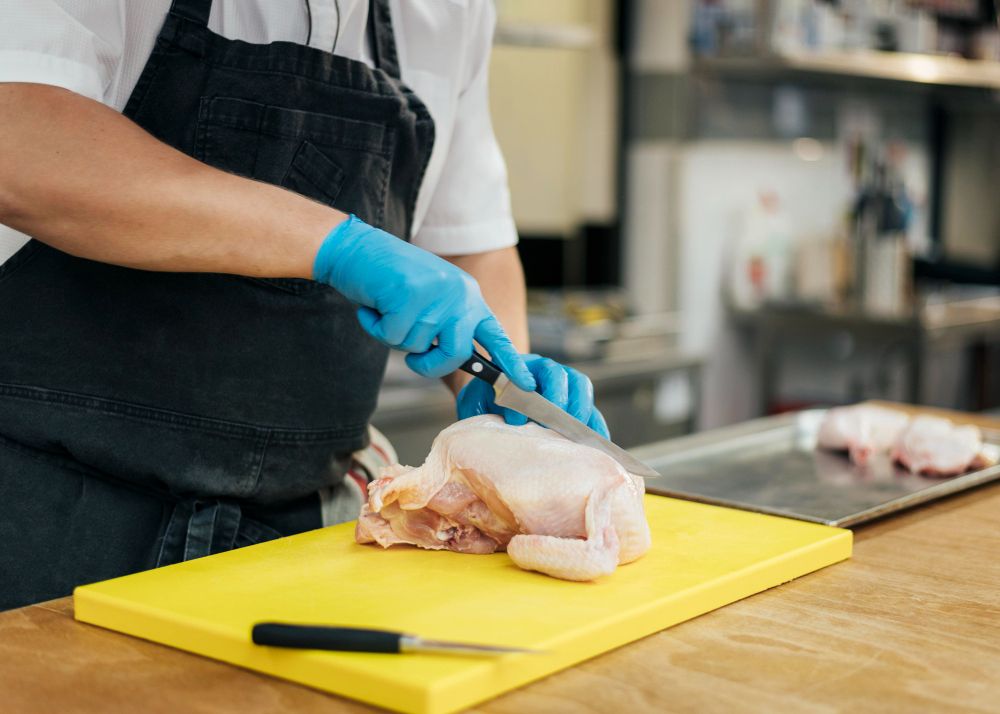
Myth 2. Working with meat always means working with a knife
Today, most meat enterprises in Poland are modern and automated, and they continue to upgrade.
This is reflected in the job vacancies meat plants offer. Often the work involves packing and sorting, which does not involve knives at all.
There are, of course, processes where some finishing work after a machine is required — for example, trimming scraps — but performing such tasks according to clear instructions poses no difficulty whatsoever.
Myth 3. Meat plants are cold
Meat production requires a specific temperature regime. It is not room temperature, but it is not below zero either. For instance, warehouses and facilities that store and produce frozen products are significantly colder.
Moreover, at meat processing companies, workers are always provided with warm workwear and footwear. At meat plants specifically, clothing is free of charge and issued at the start of every shift — because the production process demands it.
Myth 4. Meat plant work is hard and always involves night shifts
The answer is straightforward — working at a meat plant is no harder than at any other type of facility. And night shifts may or may not be required — it depends on the specific vacancies, processes and employers.
What meat industry vacancies are available right now?
At the time this article was written (May 2024), you can apply for the following positions.
POULTRY PRODUCTION WORKER (GOOSE AND TURKEY)
A meat plant in Iława (125 km from Gdańsk) is looking for men and women up to 50 years old.
Rate: 23–24 PLN/hour net, depending on the hall. Working hours — 200–280 per month.
Average salary — 5,300–7,000 PLN (52,000–68,000 UAH).
Shifts of 10 hours; overtime available.
Accommodation — first month free, then 450 PLN/month, good conditions.
Free meals provided; work clothing also free of charge.
WORKER FOR PACKING READY-MADE POULTRY PRODUCTS AND SEMI-FINISHED GOODS
In Gowidlino (60 km from Gdańsk), a facility is looking for men and women up to 45 years old to work in product packing. Not slaughter.
Rate — 24 PLN/hour net. Working hours — 180–240 per month.
Salary 4,320–5,760 PLN (42,000–56,000 UAH).
Schedule: Mon–Sat, day shift of 8 hours. Option to work 12-hour or night shifts.
Accommodation — 500 PLN. Free meal every 4 hours. Work clothing free of charge.
MEAT PRODUCTION WORKER
A meat processing facility (deboning) in Wadowice Górne (120 km from Kraków, 63 km from Rzeszów) is looking for men up to 55 years old (no experience or language skills required).
Rate: 24 PLN/hour net. Working hours — 190–250 per month.
Salary — 4,560–6,000 PLN (44,000–58,000 UAH).
Schedule: Mon–Fri day shift of 8 hours, occasional Saturdays, extra hours upon request.
Accommodation within walking distance — 450 PLN/month.
Free two-course meals.
Work clothing free of charge.
Looking for a job? Gremi Personal will find the right vacancy for you — give us a call:
+38 (050) 334-93-51 or +48 525 275 003
+38 (050) 334-93-51 or +48 525 275 003
+38 (050) 334-93-51 or +48 525 275 003


 2026-09-24
 View
View