New Photography Rules in Poland. The Ministry of Defence Has Banned Photographing Strategic Sites
Poland's Ministry of National Defence has issued a new regulation that clearly sets out the ban on photographing strategic sites. The ban itself has been in force since 2022, but only now have specific instructions appeared on how to apply it in practice.
What does the ministry's regulation say, how can you tell what is off-limits to photograph in Poland, and what penalties can violators face? Read on to find out.
What Does the Regulation Cover?
The regulation dated 27 March 2025, announced by the Ministry of National Defence on 3 April, is a key instrument for implementing the provisions of the Homeland Protection Act. The document explicitly states that photographing, filming, or otherwise capturing images of sites important for national security is prohibited. The list includes as many as 25,000 sites — not only military installations, but also bridges, tunnels, dams, airports, railway stations, courts, and government offices.
How to Tell Whether a Site Is Off-Limits for Photography?
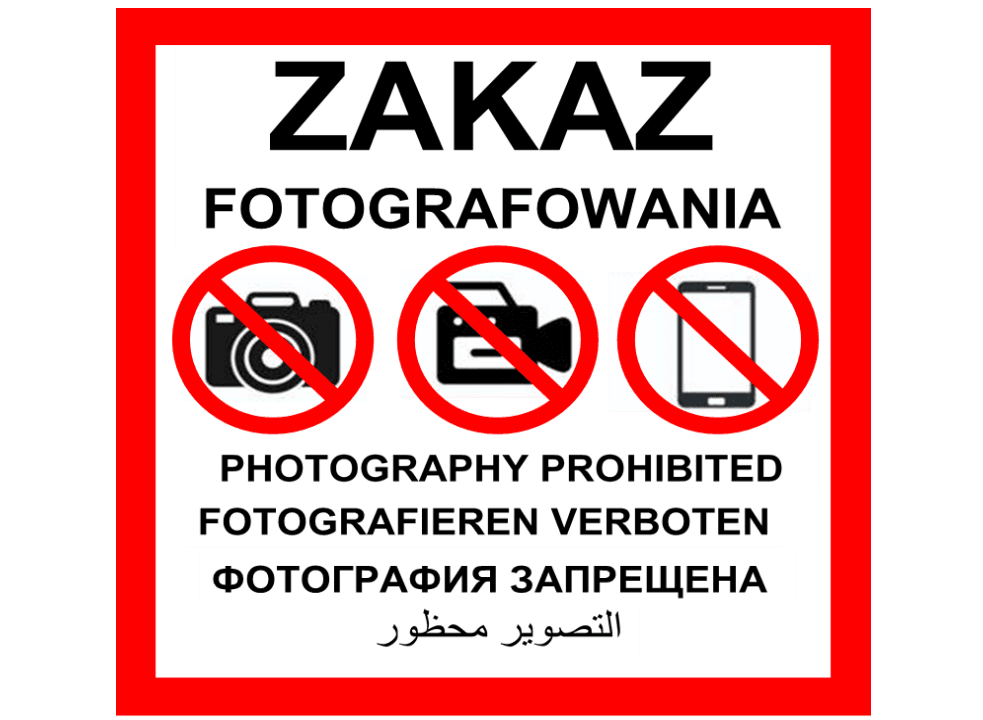
The key innovation is the introduction of special warning signs that will indicate the prohibition. Signs measuring at least 60 by 60 centimetres will be placed in visible locations — primarily on fences or building facades. The text will be duplicated in several languages, including English, German, Russian, and Arabic, so that foreign nationals cannot claim ignorance of the rules.
The absence of such a sign means that photography at that location is not prohibited. For example, taking photos of trains, planes, or ships at stations or airports where no warning signs are posted will not be considered a violation. However, wherever prohibition signs have been installed, breaking the rules will be treated as an administrative offence.
What Penalty Is Imposed for Photographing Strategic Sites?
The offence carries a fine or even arrest.
But that is not all — amendments to the legislation also provide for the possibility of confiscating the equipment used to take the prohibited photograph. Importantly, it does not matter who owns the device — if it was used in breach of the rules, the camera or phone may be seized by the authorities.
The new rules may prove controversial, particularly among photography enthusiasts and tourists, but the Ministry of Defence stresses that national security is the priority. Clear marking is intended not only to encourage compliance with the ban, but also to prevent accidental violations by people who are unaware of the strategic importance of a given site.
Looking for work in Poland? Call: +38 (050) 334-93-51 or +48 525 275 003


 2026-11-03

 View

