Residence Card (Karta Pobytu): What Is It and Who Can Apply?
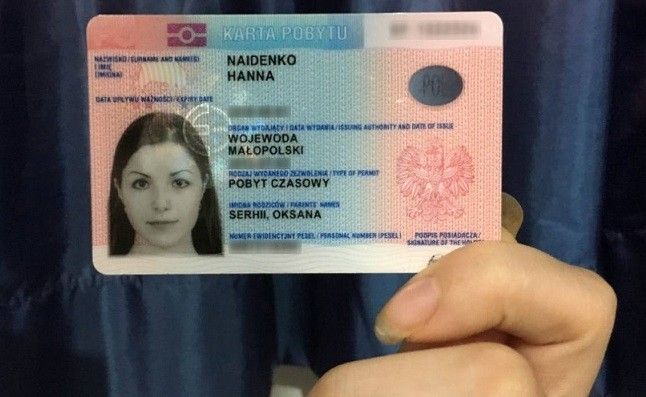
Almost every Ukrainian arriving in Poland for temporary or permanent residence has questions about the residence card (karta pobytu). In 2022, after the country received over a million refugees, these questions only multiplied — and the conditions for obtaining a residence card for Ukrainian citizens have changed somewhat.
What is a residence card and what does it offer? Which Ukrainians, including refugees, can apply for one? This article covers the essential information about this document.
What Is a Residence Card and What Benefits Does It Give Ukrainians?
A residence card (karta pobytu) is a document confirming the right to permanent or temporary residence in Poland, available to foreign nationals.
A residence card may entitle the holder to work legally in Poland — in such cases, a special annotation granting access to the labour market is added.
The residence card is sometimes confused with the Polish Card (karta polaka), but these are two different documents with their own advantages and limitations. The residence card is issued by voivodeship offices (Urząd Wojewódzki), while the Polish Card is issued by Polish consulates in Ukraine. The latter confirms Polish heritage or active involvement in the Polish community.
Ukrainians who decide to obtain a residence card will gain certain benefits not only in Poland but also across other European Union countries.
In particular, you will be able to:
- cross the Polish border without a visa;
- reside in Poland for an extended period;
- stay in Schengen Area countries for up to three months;
- officially purchase real estate and other property in Poland;
- apply for loans at Polish banks.
For most Ukrainians, the primary benefit of the card is the ability to live in the country long-term. Looking further ahead, if you are interested, you can pursue Polish citizenship.
Regarding travel within the EU, bear in mind that the residence card alone is not sufficient to cross borders. You must always carry your foreign passport as well — the document that confirms your identity and permanent place of residence.
Types of Residence Cards
What types of residence cards are there and how do they differ?
1. Temporary residence card (karta czasowego pobytu).
Grants temporary permission to reside in the country and is issued for a period of 1 to 3 years.
2. Permanent residence card (karta stałego pobytu).
Grants an indefinite residence permit (zezwolenie), though the physical card must be renewed every 10 years.
Usually, to obtain a permanent residence card, you must prove Polish heritage (which is why this card is often obtained after the Polish Card).
3. EU long-term resident card (pobyt rezydenta długoterminowego UE).
An open-ended residence document that can be obtained if you have previously lived in Poland for at least 5 years — continuously and legally. With this card, you can officially live (and sometimes work) not only in Poland but also in certain other EU member states.
The list of documents required to obtain a residence card changes from time to time. It is best to check the current document requirements directly with the voivodeship office where you plan to submit your application.
Below is an approximate list:
- completed application form,
- 4 photographs (35×45 mm),
- original and copies of your foreign passport;
- document confirming employment in Poland;
- documents confirming sufficient financial means (e.g. a salary certificate);
- proof of payment of the service fee.
In some cases, to clarify the circumstances, you may be asked to provide additional documents.
Which Ukrainian Refugees Can Apply for a Residence Card
This year, Poland introduced changes to its migration policy for refugees from Ukraine.
A brief timeline: on 12 March 2022, the Act on Assistance to Ukrainian Citizens in Connection with Armed Conflict was adopted. On 27.01.2023, amendments to this act were passed.
Under the amendments, persons who moved from Ukraine to Poland after 24.02.2022 and received UKR status are, from 1.04.2023, entitled to apply for a residence card on only three grounds:
- Formal employment.
- Employment in a highly qualified position (Blue Card).
- Business activity (sole proprietorship/company).
Which Refugees CANNOT Apply for a Residence Card
The following categories of Ukrainian citizens who arrived in Poland after 24 February 2022 are not eligible to apply for a residence card:
- Children — for family reunification or on any other grounds, regardless of the parents' status. The exception is a child born in Poland to parents who obtained a residence card before 24.02.2022.
- Husbands and wives of residence card holders or those who plan to obtain one.
- Husbands and wives of Polish citizens (regardless of whether the marriage is formal or civil).
- Non-working pensioners.
- Pupils of primary schools, high schools, post-secondary schools, as well as students and graduates of higher education institutions.
- Employees of companies from other countries seconded to Poland by their employer.
- Academic staff — researchers and scientists.
- Volunteers.
- Seasonal workers.
- Persons without UKR status who arrived from Ukraine after 24 February, as well as those who, for certain reasons, are unable to restore that status.
- Persons who arrived in Poland from other EU member states, Schengen countries, or third countries and are unable to obtain a PESEL UKR number or UKR status.
All of the above persons may remain under temporary protection in Poland until 4 March 2024. Most likely, after this date, the Polish government will extend the protection status for refugees or offer alternative forms of support.
Looking for work? Submit your application now or call +38 (050) 334-93-51 or +48 525 275 003 or +38 (050) 334-93-51 or +48 525 275 003.
Gremi Personal continues its series of useful articles about work and life in Poland. Read our materials or watch videos — choose the format that suits you best.


 2026-11-03

 View

