Which Polish Cities Made the Ranking of Europe's Best Cities 2025?
Analytics firm Resonance Consultancy, in partnership with Ipsos, has published its annual Europe's Best Cities 2025 ranking — the top 100 best European cities for living, investment, and tourism.
This year's ranking includes five Polish cities: Warsaw, Kraków, Wrocław, Gdańsk, and Poznań.
Polish Cities: What Strengths Did the Ranking Authors Highlight?
The authors of the ranking not only compiled a list of the best cities but also described in detail the advantages of each one. You can explore the full profiles of each city at the official link, and below we invite you to see Poland's major cities through the eyes of the experts.
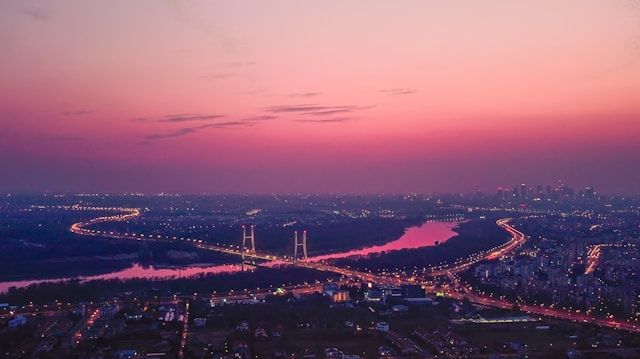
19th place — Warsaw
Warsaw ranked 6th in the Prosperity Index, recording the lowest unemployment rate in Europe (1.4%) and the third-highest level of educational attainment. With a new pro-European government in place, the city is experiencing a genuine renaissance.
Notable projects include the reconstruction of the Saxon Palace, the opening of a new cultural centre housing the Museum of Modern Art and the TR Warszawa theatre, as well as the renovation of the historic Haberbusch & Schiele brewery, now a popular leisure destination — Browary Warszawskie.
Infrastructure is also evolving: new cycling and pedestrian routes are emerging along the Vistula River, while the Varso Tower — the tallest skyscraper in the EU — is becoming home to international companies. By 2032, the Central Communication Port (CPK), a large-scale transport hub near the capital, is set to open.
29th place — Kraków
Kraków, one of the most historic cities in Eastern Europe, has preserved its unique heritage — from the Royal Castle at Wawel to the Cloth Hall, considered the oldest shopping centre in Europe.
In 2024, a new Museum of Modern Art opened on the banks of the Vistula, boosting the city's tourism appeal — it ranks 12th for number of attractions and 19th among cities with the best museums.
Kraków also demonstrates strong economic activity: investments from Google, Ryanair ($800 million), Volvo Cars (technology hub), a growing number of offices and residential developments, and one of the lowest unemployment rates in Europe.
The city is advancing sustainable transport, with a robust cycling infrastructure (11th in the "Biking" category), and its metro — Poland's second — is scheduled to launch in 2028.
72nd place — Wrocław
Founded in the 10th century, Wrocław is Poland's fourth-largest city, known for its pan-European architecture and more than 100 bridges spanning the Oder River — earning it the nickname "the Polish Venice."
The city ranks in the top 20 for number of attractions and is Poland's third-largest academic centre, with over 130,000 students enrolled at 28 universities, including faculties of medicine, economics, IT, and music.
Wrocław has the tenth-lowest poverty rate in Europe and actively attracts foreign investment — global companies such as IBM and Volvo Group operate here. The city draws digital nomads and startups, earning the reputation of "Poland's Silicon Valley."
Logistics and warehouse infrastructure are also expanding rapidly, including Panattoni's Wrocław Campus project spanning 160,000 m².
76th place — Gdańsk
Gdańsk, a city on the Baltic coast whose architecture evokes Amsterdam or Stockholm, has deep historical and cultural roots. It was here that World War II began, and later that the Solidarity movement was born — a symbol of the struggle for freedom.
Today the city is a powerful financial, industrial, and educational centre: it holds the third-lowest unemployment rate in Europe and ranks seventh in educational attainment. Gdańsk's creative infrastructure is flourishing — the historic Młode Miasto shipyards are being transformed into a 16-hectare cultural and business district.
The city is also championing cycling, having hosted the Velo-city cycling summit in 2024. In the EU quality-of-life ranking, Gdańsk placed 4th among all European cities.
83rd place — Poznań
Poznań, Poland's fifth-largest city, is actively strengthening its position as a scientific and business hub, attracting multinational companies including Roche, Amazon, and Unilever. Its strong university ecosystem produces highly qualified graduates each year, making it an attractive destination for employers.
Poznań has convenient air connections to Dubai, supporting business development and tourism. The city is also a key venue for international conferences and trade fairs — the Poznań Congress Centre accommodates more than 4,000 participants across 38 equipped halls. In 2024, two concert halls will be added to the complex, transforming it into a cultural centre.
The historic Old Town, founded as far back as 1241, has recently been renovated — the main square is now more accessible and welcoming for residents and visitors alike. Poznań also ranked 30th in Europe for the quality of parks and the natural environment, combining economic growth with a commitment to comfortable urban living.
Key Trends Shaping European Cities in 2025
The experts not only compiled a list of the best cities but also analysed the trends defining their development and appeal.
Urban resilience: London, Paris, and Berlin maintain their positions thanks to infrastructure, culture, and the ability to adapt to global challenges.
A new approach to quality of life: The ranking considers not just economics, but also culture, environment, safety, service levels, and the emotional perception of a city.
The rise of Eastern Europe: Warsaw and Budapest are rapidly gaining popularity thanks to dynamic development, affordability, and cultural growth.
City branding and reputation: Cities that know how to position themselves and communicate their strengths have a greater chance of attracting investors, tourists, and new residents.
How Were the Best Cities Determined?
The ranking included 100 European cities with a population of over 500,000. Assessment was based on three key criteria:
1. Livability — healthcare, transport, education, environment.
2. Lovability — culture, entertainment, public spaces.
3. Prosperity — economy, employment, innovation, startups.
In addition to statistical indicators, Resonance and Ipsos surveyed more than 7,500 residents across 10 European countries to assess how they perceive the cities.
Europe's Top 10 Cities in 2025:
- London
- Paris
- Berlin
- Barcelona
- Rome
- Madrid
- Amsterdam
- Vienna
- Prague
- Stockholm
The full list is available at: worldsbestcities.com
Looking for work in Poland? For more information, contact us: +38 (050) 334-93-51 or +48 525 275 003


 2026-09-24
 View
View